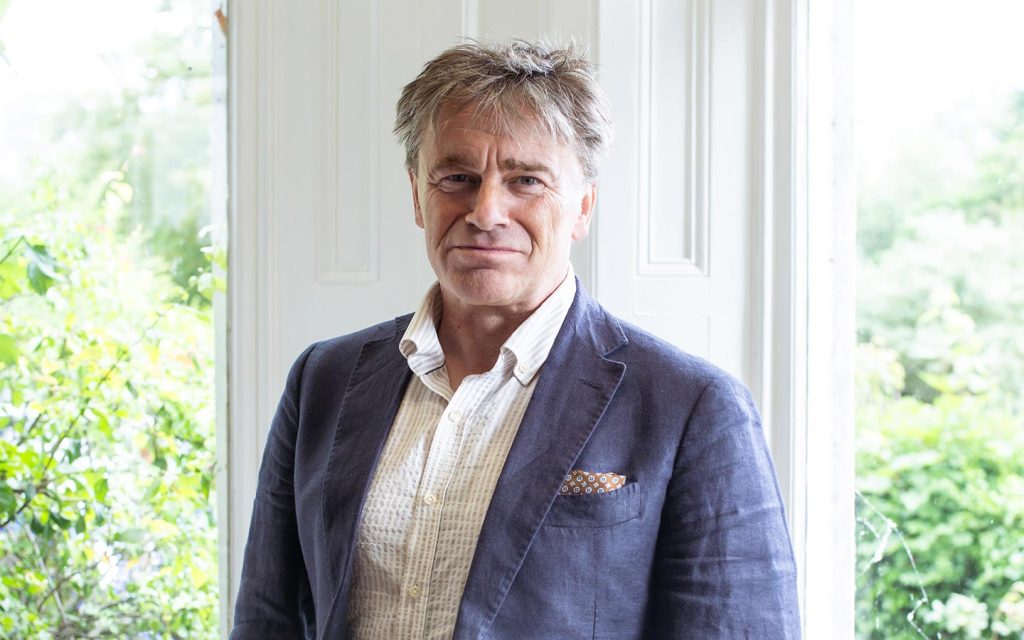
Project Manager (Professor and Executive Leader)
Qualifications
- Fellow of Chartered Institute of Builders (President from June 2026) – PCIOB/FCIOB
- Fellow of the Royal Institution of Chartered Surveyors – FRICS
- Fellow of The Institution of Civil Engineers – FICE (honorary)
- Member of Chartered Institute of Arbitrators (MCIArb)
- Chartered Environmentalist (CEnv)
Route
- ONC (City College, Norwich)
- HNC (City College, Norwich)
- Masters Degree in Construction Management (Heriot Watt University, Edinburgh) – MSc (with distinction) 1993
- Doctorate in Construction Management (Procurement) (Loughborough University) – PhD 2003
Career Path
Following O-Levels at Gorleston Grammar School, I worked as a lifeguard in the summer holidays before deciding not to do A-levels and instead start on the Government’s new YTS scheme (earning just £25/week). The one-year scheme almost guaranteed the chance of full-time employment and a pathway to being a Chartered Surveyor (or Chartered Builder). In truth the aspiration of being a surveyor was based on my slightly older next-door neighbour’s success. He was a surveyor and he had a great car.
I had done a little bit of construction work helping friends in summer holidays and weekends on a large site in Gorleston – I wasn’t a great shuttering carpenter but I liked the work. Actually creating something – and playing with big lumps of plant and equipment – was great work and saved going to the gym. It paid well too.
I was placed with R G Carter and I stayed there a long while! I started at just 16 years old but I was given experience across the whole business. On the very first day I was entrusted to demonstrate my (limited) competence on a forklift. I wasn’t great but I got better. I worked on sites across all trades and in the joiner’s shop. I was allowed to watch/learn from the best foreman/site agents. By coincidence, on the day I started, I also met Helen who had also commenced work at Carters a few weeks earlier. She worked in Accounts. Helen became my wife a few years later (and still is!).
I worked hard and learned a lot – all whilst spending one day a week at City College Norwich on the first year of the ONC. So many people on that course are still friends today. I have met so many more since. So many colleagues in the industry are also my very best friends today. Construction is good like that.
I spent a lot of time on site, but gradually my role shifted towards spending more time with setting-out engineers, surveyors, estimators, buyers, contracts managers and even accountants. My embryonic trade skills had to extend quickly, but again a rotation around departments, working with different people in different roles was so useful. I wasn’t with any team long enough to pretend to have mastered anything yet but the breadth and insight to every part of the business was so beneficial.
What I learned at work complemented what I learned at college. As early years passed, I was given more and more responsibility. The first project I was entrusted with was pretty modest – a toilet block in Gorleston and then a Bowls pavilion in Great Yarmouth, I wasn’t really ready to run sites, but I was surrounded by great people (that is perhaps the story of my life).
Finishing jobs safely, to a great quality, on time (and profitably) was the goal. As I got better at this, the jobs got bigger and the role became broader. After four years I had passed my HNC (With Distinction) and been promoted to Surveyor.
A few years more and the jobs kept getting bigger. My role broadened and I was elevated to “senior surveyor” and then “senior project manager” and then “senior contracts manager.”
Concurrently, I had noticed that the R G Carter Group’s CEO had a Masters degree. I decided pretty early on that if I wanted to emulate his success and lead the business, I could do worse that do the same. The CEO in question and the Chairman, Mr Carter supported me and I commenced my (part-time/day-release) Masters at Heriot Watt University in Edinburgh. I really enjoyed the academic challenge and mixing with post-graduates from all over the world. Many of our lecturing/master class sessions were ‘on site’ at Heathrow Airport’s Terminal 4. It was in truth my first hands-on experience with a mega-project. I loved the whole experience and graduated in 1993 with a distinction.
I used this academic experience, coupled with my greater management knowledge and growing construction experience to become a Chartered Builder (MCIOB). Being Chartered had always been a goal. I added membership of the Royal Institution of Chartered Surveyors a little later and then a few more.
Back to the day-job, after having led multiple projects, I was promoted to Group Commercial Manager and had to help resolve some of the more testing problems the business faced.
And then at 29, I was asked to become General Manager and lead one of Carter’s companies. I was also made a Director. (The youngest in the Group ever apparently!) This was my first chance to manage the whole breadth of a business. Management turned to leadership. Marketing, engaging staff, adjudicating tenders, signing-off accounts…new skills were learned fast. My personal ‘doing’ became ‘delegation’ (with continued support and ownership). Five years later, the one company had become many more. We had grown ten-fold. We had opened multiple branches and diversified from being a traditional builder with a reputation for heritage work and joinery into a major house-builder, insurance repairs specialist and award-winning main contractor. My success in this first post was the result of good fortune, great colleagues, trusting leadership and a lot of hard work – but as always, I loved every minute.
I was also asked to lead the Group’s new Civil Enginering business and I took over responsibility for the Maintenance business too.
Carters, however, had plans. After five years I was asked to lead the Cambridge business and then the Colchester business, and then Ipswich too. Whilst at Colchester, I experienced what was then my largest contract, A £2Billion PFI at Colchester Garrison alongside Sir Robert McAlpine. Again, I learned a lot from working on this huge site of 110 new buildings all finished in just four years. I learned even more from a massive team of truly talented people.
The time flew by. By now I was married with two children. I’d also started to broaden my construction base with ambassadorial roles with Cambridge Ahead, with National Federation of Builders, the Faculty of Building and more. I felt it was important to represent the industry and support initiatives that might improve our performance, reputation or deliver greater innovation.
I had also decided to further my academic studies with a Doctorate at Loughborough University. It took me for forever as I was trying to run a lot of things at the same time. The PhD was tough but worth it. It extended (and tested) my knowledge enormously and gave me an insight to the value of peer reviewed research and academic rigour.
By now, I’m 41 and that was when I was asked to transfer back to Norwich to lead R G Carter Limited at Drayton. This was Carter’s founding and largest company. I inherited a brilliant team (again) and a workforce of 500, which would have been brilliant but for the global financial crisis that soon arrived with little warning. It was 2008. A plethora of new challenges arose, but again, after some tensions, stability was restored and a quite brilliant team delivered beyond all my expectations.
By now, my role again extended. I had been a Director of the Group’s Construction Board for a decade and I was ostensibly leading the Group’s business in the East. I was also asked to step into a variety of additional roles. Helping lead Constructing Excellence, Chairing Building Growth for New Anglia LEP, becoming a College Governor and more. My role at Carters supported this as supporting the next generation of talent and the region’s growth agenda all complemented the Firm’s values.
And then, after 33 years at R G Carter – and I had loved 99% of it – the situation changed and, very suddenly, a new opportunity unfolded.
I left Carters and joined Morgan Sindall as Managing Director in the East. The business was very similar to Carters but also entirely different. It was not a regional, privately owned business. It was (and is) a successful, national PLC. When I last checked, Morgan Sindall employed 8,500 people and annual turnover was circa £5Bn. It too is a truly great business.
Two years later, I am 51 and it is time for something else and another big move.
I left Morgan Sindall and started my own consultancy, eponymously called Saul D Humphrey LLP (but hardly original). I found myself with no staff, no shareholders, no deadlines, no Board meetings and no travelling, but I had a lot of friends, some whom quickly became clients. Immediately, I was free to go back to what I loved: hands-on, running projects, choosing my own teams, setting my own targets and priorities. But this time, I was also able to focus on only delivering what I considered to be more sustainable developments. Over recent years, I had been increasingly aware of the accelerating climate breakdown, biodiversity loss and excess pollution. I really wanted to do something good. Less about EBITDA more about ESG. I wanted to lead a consultancy that was less focused on turnover and profits but instead, driven by making a positive difference. Building a more sustainable and more resilient future. Ostensibly, I now tend to lead projects from the Client’s perspective, engaging professional teams and contractors to deliver what might be larger or more complex projects or perhaps heritage or conservation projects that align with my quest for greater sustainability and resilience. I also do a little ‘trouble-shooting’ and executive coaching when asked.
Eight years on, I have rarely been happier. I still work hard but I have now broadened my consultancy offer to allow me to also undertake a number of additional and complementary roles too.
Three years ago, I was delighted to be offered a Professorial post in Sustainable Construction at Anglia Ruskin University.
I was also honoured to be asked to become the President of Chartered Institute of Builders (from June 2026). The CIOB has over 50,000 professional members in over 100 countries. The Institution has a Royal warrant and is almost 200 years old. It feels like quite a responsibility to be the President.
I chair the Institute of Directors too.
I also have a few Trustee, Ambassadorial, Non-Executive Director and other Chair roles too. This portfolio of roles allows me to have the optimal engagement and impact, hopefully giving back a little of what I have learned over the years.
My career journey may not be typical, but like many in construction, I got the chance to try things. To build things. Not just buildings, but places. Structures and businesses. Helping people and teams because they help you. Taking the construction metaphor further, you do need strong foundations and a good framework but this industry has an abundance of opportunities if you have the right values and purpose. And it always helps to have good people alongside!
Current Role
I have many roles now. Currently the main ones are:
1. Managing Partner of Saul D Humphrey LLP (B Corp). My own professional project management/construction consultancy.
2. President of Chartered Institute of Builders (from June 2026)
3. Professor of Sustainable Construction at Anglia Ruskin University
4. Chair Institute of Directors (Norfolk and Suffolk)
5. Director of Great Yarmouth Borough Council’s Equinox Enterprises and Equinox Property Holdings
6. Director of Norwich City Council’s East Norwich Delivery Board (the Colman’s site +)
7. Trustee of Construction East and many more ambassadorial, trustee and governor and advisor roles.
Salary Range
Varies significantly, depending on role, responsibility, qualifications and experience.
Salaries range enormously from early career construction professionals to Managing Director/CEO for those at the top of their profession.
Typical Day
Every day is incredibly different. Literally from being on a scaffold on a live site to a strategic leadership meeting /roundtable in Parliament.
Things I wish I’d known
Luck is important, but you can make your own – and it is much easier if you have great people around you.