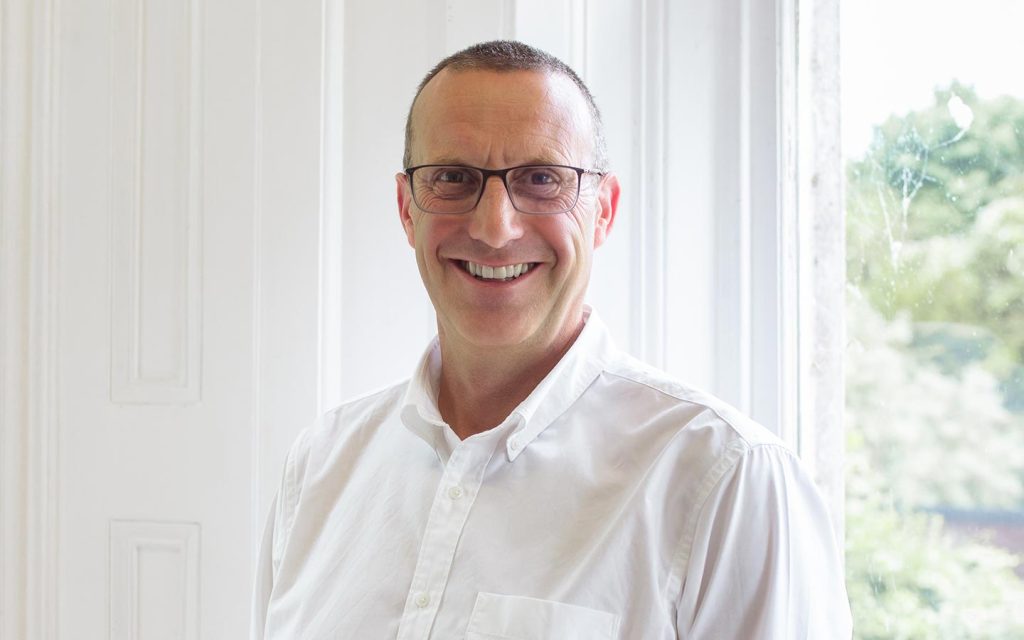
Construction Project Manager
Qualifications
- OND Building
- BSc (Hons) Construction Management
- Member of the Chartered Institute of Building
- Various specific safety and technical qualifications
Route
- OND Building, City College Norwich, 1987-1989
- BSc (Hons) Construction Management, Coventry University, 1989-1992
- Member of the Chartered Institute of Building, passed chartered interview in 1998
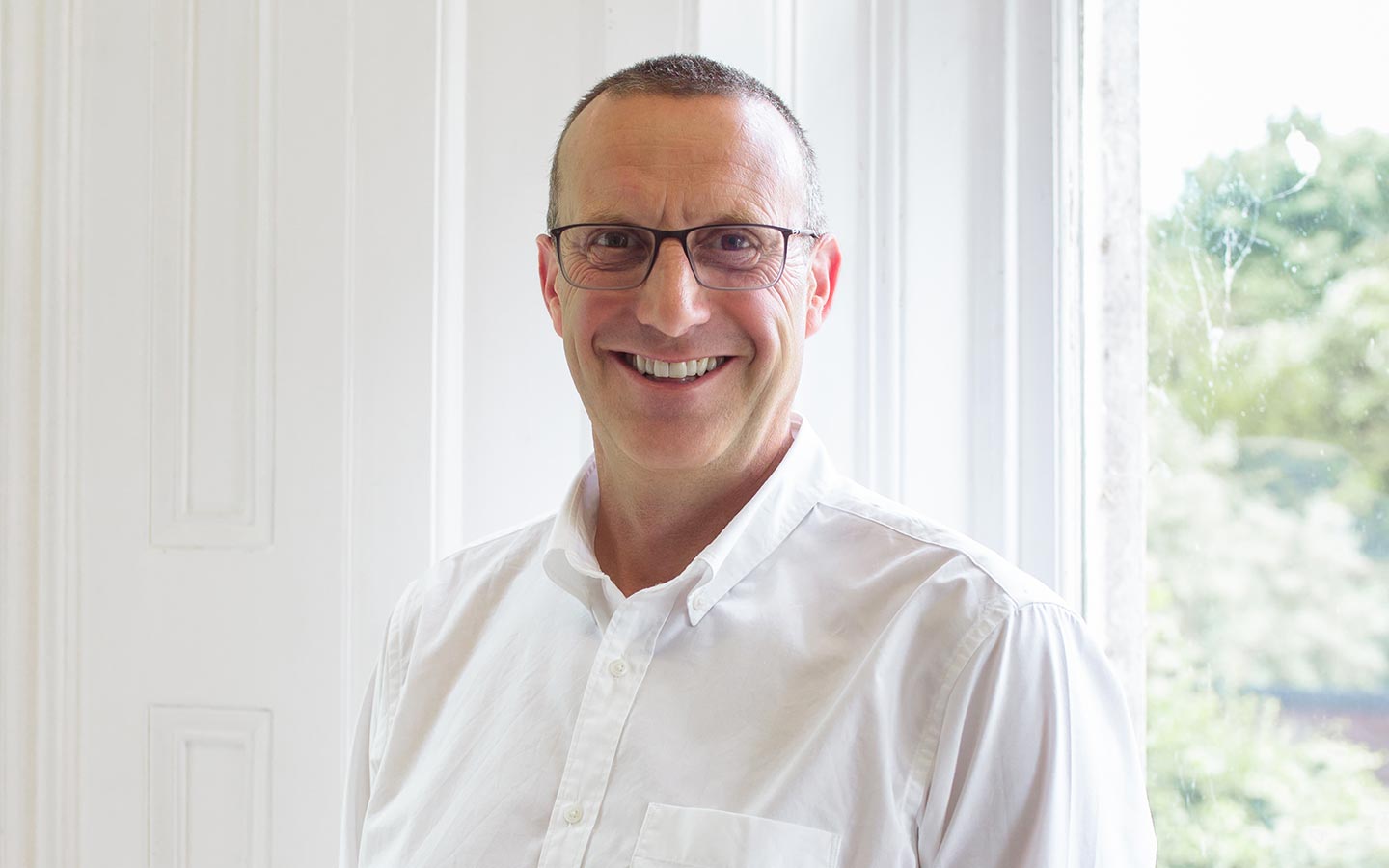
Career Path
I was always academically competent but lacked a bit of direction and focus. I much preferred sport and being outside, which is still the case to this day. I was always playing sport to a reasonable local level and enjoyed the people, team spirit and competition.
When I completed high school, I’d achieved OK results but was just focused on getting a job. I wanted a job to earn some money and to get a car. In the late 80s, the banks and Norwich Union would recruit school leavers, so this is where I applied, getting a job with Barclays with a September start and Norwich Union with a July start.
I accepted both, thinking that if I didn’t like Norwich Union I’d go to Barclays. I hated working in an office, hated the work and soon decided this wasn’t the route for me.
I think my mum said, “If you don’t like being inside, look for a career outside.” I looked for courses and gained a place on the BTEC OND course in Building at City College.
The course was full-time and we had the support of many excellent lecturers from industry. I enjoyed the course and even found a little focus, gaining good results which allowed me to go to university.
I went to Coventry University to complete a BSc (Hons) in Construction Management. The course and lecturing were pretty average, but I enjoyed university life and made some friends for life. Again, I did OK at university, but looking back at school, City College and university, I would say that at that time the education from City College was the best of the three.
I needed a job and in 1992 the economy was not in a great place. My university course was supposed to include a sandwich year in industry, but most people on the course went straight through as industry placements were not available.
I got a lucky break. I applied for a job as an Estates Officer in the NHS, a job I was completely inexperienced and underqualified to do, but I got an interview. They offered me the job and gave me a chance.
The whole Estates team, led by Richard Bloom, were amazing to me. They took time to teach and guide me, invested in my knowledge and supported me every step of the way. I cannot thank this team enough, firstly for the opportunity, but also because they trusted me and greatly supported my career development.
We all need an opportunity in life, but I like to think I repaid them by working hard, being dependable and delivering many projects.
After three or four years, NHS funding was starting to reduce and my Estates Officer role was changing into more of a maintenance role, which was not the project delivery work I enjoyed.
Kier, a large national contractor, was advertising for project team members after securing a hospital project at RAF Lakenheath. I applied and gained the position of Assistant Project Manager.
This was a good move for me. I worked with a great team and learnt so much. Kier was also very good at staff development and I completed many managerial development courses, which were excellent for my progression.
I was with Kier for 15 years and really developed my role from Assistant Project Manager to Project Manager, Contracts Manager and finally Senior Contracts Manager.
I really enjoyed the people, the teams, the projects and the local construction community. I also always enjoyed the competition of finding and winning work.
My best project was the full refurbishment of the Sainsbury Centre for Visual Arts, which remains my favourite building. Kier really helped to develop me and helped me understand the sort of manager I was and how best to use those skills.
Kier went through a restructure and was amalgamating the eastern offices into a single Cambridge office. This wasn’t what I was looking for and I was probably disappointed that the Norwich office and team I had worked so hard to establish was being disbanded. It was time for something new.
I spoke to friends in the industry while looking for the right next step. I met with Mike Saxby, who gave me the opportunity to set up a new main contracting business to complement his established subcontracting business.
Opportunities like that don’t come along very often, so with my wife’s support we decided to go for it. MJS Projects was born.
This was scary. Starting with a completely blank piece of paper is tough and you soon learn who your friends are in the wider industry. I will always be grateful for the support of so many people who helped at this time, including the UEA team who gave us our first job.
That was 13 years ago. The team has grown, with key friends and colleagues joining and shaping the business, including Ian, Mark and Nick.
We now employ 23 people and turn over £30m. It has been a tough journey but so rewarding, and I’m very proud.
I’ve learnt so much about running a business, but the key skills of teamwork, hard work, communication and treating others as you would like to be treated yourself consistently shine through.
The next steps are to keep developing others in the business, stay close to and support clients and industry colleagues, and try to support others on their career journey, as so many people have supported me.
Current Role
Director of MJS Projects
Salary Range
Contracts/Project Manager: £60,000-£90,000 plus car and bonuses. Individuals who consistently deliver, build relationships, manage risk and bring in work can earn more.
Typical Day
On site, as a Project Manager you always have a plan, but this changes most days. It’s always a blend of checking all aspects of the project, communicating, planning and ensuring the team are delivering a safe and efficient place of work.
My current role is very varied, working on the business, working on tenders or visiting sites. I meet loads of people, explore future opportunities, ensure we are achieving our clients’ goals and make sure our people are supported.
One of the best things about the industry is the variety. Projects are typically reasonably short, so new challenges are always around the corner.
Things I Wish I’d Known
My experience is that people want to help you. Ask lots of questions. Always treat people well, think about what people want, listen, trust yourself, work hard, go the extra mile and be brave.